
Start with the relationship, not the label
Genre names are useful entry points, but they are imperfect containers. In deep house, a steady house pulse often meets rounded bass, harmonically rich chords and a sense of space. None of those elements alone proves that a recording belongs to the style. What matters to a listener is how they work together. Start by locating the kick, then notice how the bass either meets it or answers it in the gaps. A track can feel relaxed even when its underlying beat is quite firm.
The chord is part of the rhythm
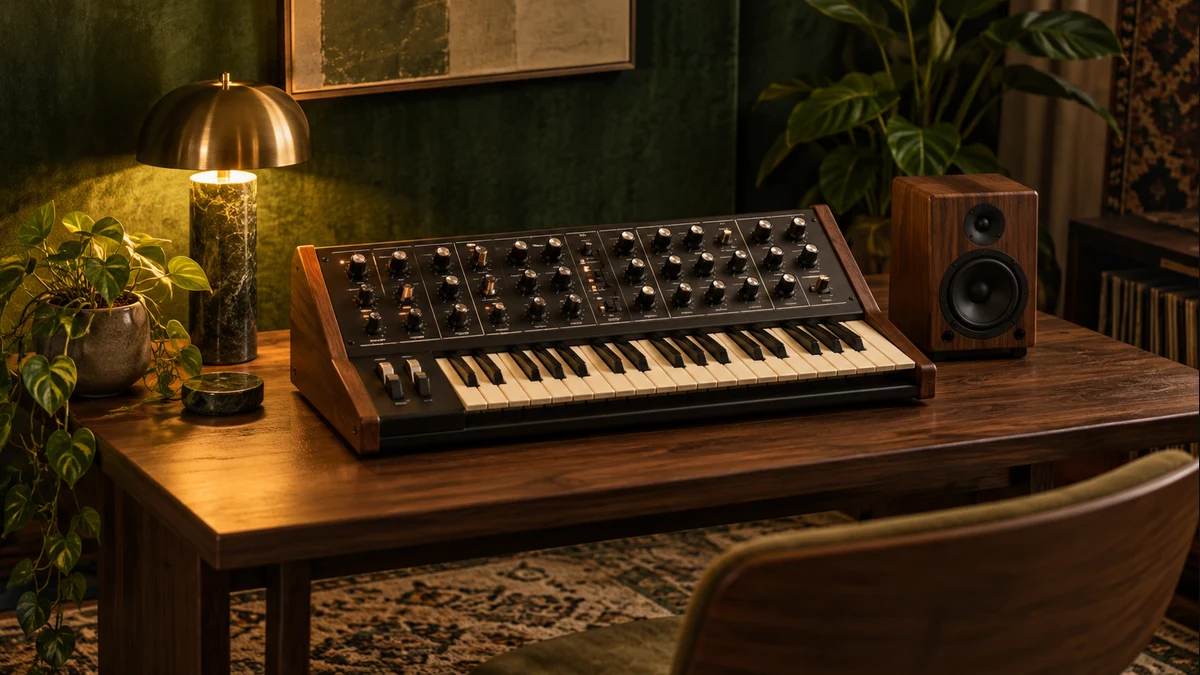
A sustained chord does more than provide harmony. Its attack creates a rhythmic event, and its release decides how much room remains before the next one. Play a simple minor chord on every second beat, then shorten each note. The pitches have not changed, but the groove has. In an arrangement, a filtered keyboard or soft pad can perform this role without drawing much attention to itself. Listen for the chord’s envelope: how it starts, how long it holds and how it fades.
Why the gaps matter
A dense mix can obscure the very details that create movement. Space between bass notes lets the kick remain distinct. A missing hi-hat can make the next one feel more deliberate. Try a listening exercise: follow only the high percussion for eight bars, then only the bass for the next eight. You may discover that the part you thought was static contains tiny variations. You do not need technical vocabulary to hear them; naming them simply makes it easier to communicate what you notice.
Build a useful listening session
Choose two short examples and match their playback volume by ear before comparing them. Louder audio can appear more exciting even when the arrangement is less interesting. Write three observations about texture, rhythm and space. Avoid describing one example as objectively better. A tightly packed club arrangement and a spacious home-listening sketch serve different settings. Our Weightless Space and Velvet Underground studies offer two small variations on a shared idea, rather than a definitive history of house music.
A starting point for your own sketch
Set a comfortable tempo around 116–122 BPM, add a steady kick and write a two-chord phrase. Introduce one bass note between two kicks, then resist adding anything else for a minute. Change a note length before adding a layer. If the groove improves, you have learned something useful about timing and space. If it does not, return to the simpler version. The purpose is attentive experimentation, not adherence to a rigid recipe.
Further exploration
For a technical explanation of browser sound generation, see the MDN Web Audio API documentation. These field notes are practical listening exercises, not a comprehensive history or rigid definition of a genre.
Technical background
- Ableton Learning Music: make basslines — Bass pitch, harmony and rhythmic roles.
- Ableton Learning Synths — Interactive envelope and timbre fundamentals.
Original 51ROUSI editorial content. How we write and review · Suggest a correction